The skill that took you years to master is going to stop being your job (do these 5 things instead)
I got paid to build software and I haven't done it by hand in over a year. This is how you go from executing to directing.

Go to college.
Specialize.
Get a good job.
Gain experience. Move up. Go after a better salary.
Get so good at something that a company will always need you.
A lot of us were taught that path. And one day it started to work: you knew how to solve problems, there was work that depended on you and you made a living from that knowledge.
You had become an important cog.
But exploring another career could feel like going back to the start. After years of building experience and an income, how could you afford to be a beginneragain? That's how you started putting other interests off for later.
I got my first job as a software developer in 2010. I worked at a local company, freelanced and started a company with a team of six.
In 2018, at 27, I went broke.
I decided I wouldn't go back to a job like the ones I'd had before: I wanted to land contracts as a software engineer for companies abroad and earn in dollars. I put all my time and resources into learning English.
In three months I went from a basic level to being able to get through a job interview. That path took me to companies in the United States and, later, to Silicon Valley startups.
For years, programming felt like a superpower: I could build things that a lot of people needed and few knew how to make.
And thanks to that, my life changed completely. I got to live very comfortably, buy myself a good car and travel the world. Programming opened up possibilities that used to look very far away.
Then a text box they called ChatGPT showed up.
At first it looked like Google with superpowers.
Today I have agents doing real work on my computer: tasks I used to do myself, with fifteen years of experience, and that in many cases they do better and faster. I can coordinate work I would have split among several specialists.
In tech, our turn came early.
I had to change the way I work; now it sometimes takes me longer to decide the next step than to execute it. It still feels like living in a science fiction movie.
What I learned in order to work inside a company can also help me build my own.
That possibility makes me think of a digital Renaissance: combining my experience with other interests and learning while I build.
That's where I see the opportunity in the one-person company.
I want to show you what to do with that skill that took you years to master. It's five things, and you can start this week:
- Pick a problem you already understand.
- Define a small deliverable and how you'll know it works.
- Separate your decisions from the execution you can hand off.
- Test the whole thing end to end and show it to someone.
- Turn what already worked into a process.
If you only came for that, scroll down to "The 5 things I'd do this week."
First I'll tell you about the three changes in going from executing to directing: how much work you can set in motoin, what your experience is good for now and how I went from exploring other interests to directing a team.
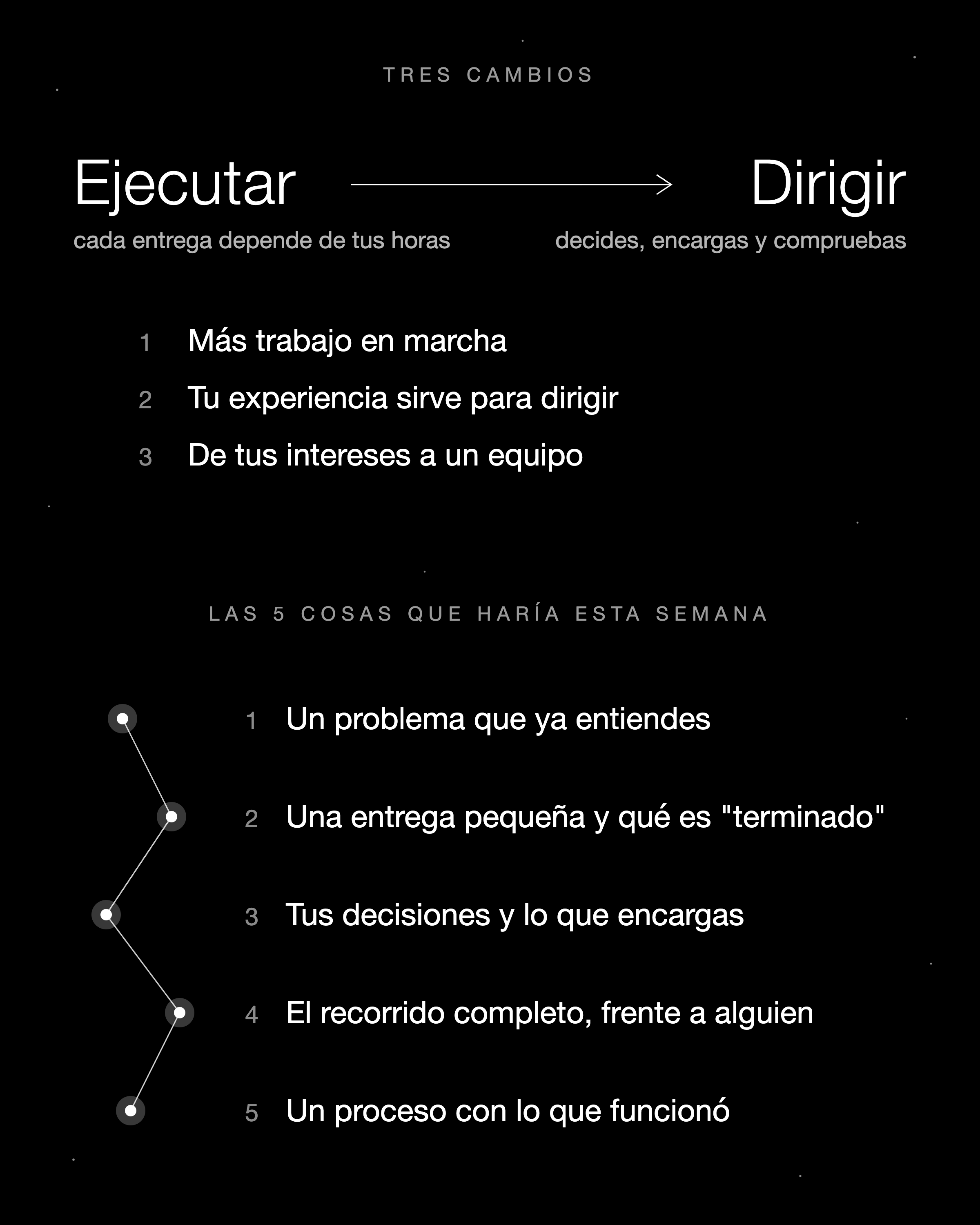
First change: how much work you can set in motion
Years ago I filled my apartment's living room with desks. I had hit the limit of clients I could handle alone and I needed to multiply myself. Hiring people was the way I knew to do that.
Today my first question is different: what work can I hand off to an agent, and what does it need to do it better each time, with less involvement from me?
I can start with research, development or preparing materials, check the result and fix the process before hiring a whole structure.
("But one-person companies already existed. That's called freelancing.")
Sure, independent work has been around for a long time. The difference I care about is how much the operation depends on your hours.
If every delivery requires you to execute everything, I'd call that self-employment. A freelancer can also build processes and delegate. The name you give it matters less than what happens when you get up from the chair.
The company I want to build works like a system: I set a direction, hand out responsibilities and check the results. Part of the work has to be able to move forward between one decision of mine and the next.
Agents give me more capacity to attempt that kind of operation. Getting clients, delivering something useful to them and keeping the business going is still part of the job.
My interest in automating started before AI.
In January 2022 I requested my visa appointment and they gave it to me for 2024. To move it up I had to log in again and again to look for open slots. I built a bot that did it for me and managed to move it to mid-2022.
Later I turned that solution into a product. The business didn't go the way I expected, but that impulse is stillwith me: solve a problem of my own and explore whether the solution is useful to someone else.
Now I'm exploring other interests, storytelling among them.
In August, a friend who owns an ice cream shop in Armenia, Mi Mango, commissioned a video from me about the August 10 earthquake. I made an animated film of almost three minutes, in claymation and with AI, about how we Colombians helped each other after the quake. It took four days from the request to the post.
Almost 3.5 million accounts saw it and it has more than 5.4 million views. What comes up most in the comments is that people cried. Almost nobody asks about the AI.
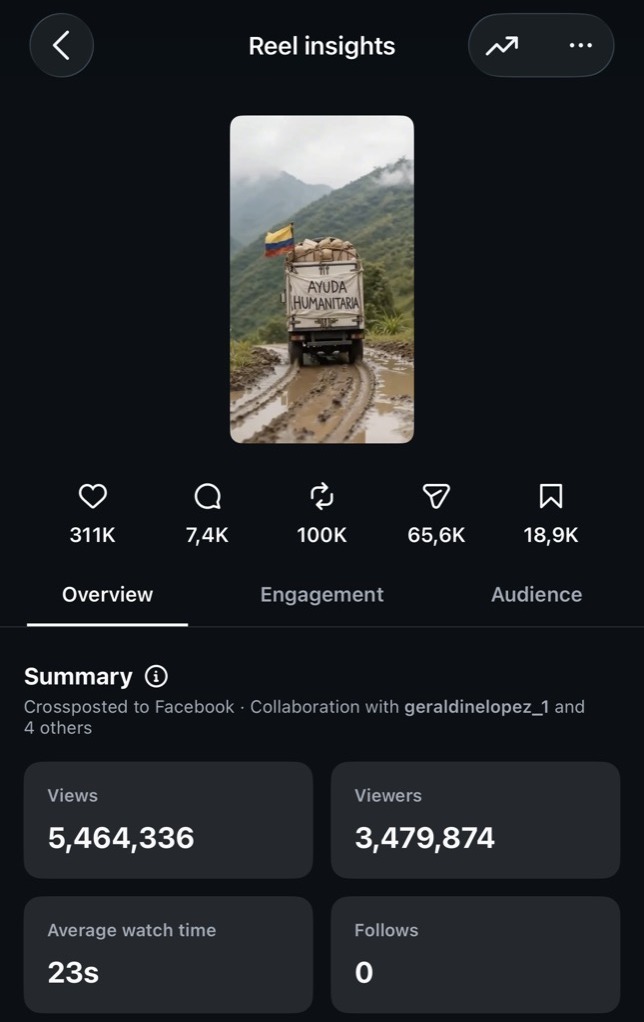
After that I got a lot of messages from people in Colombia, the United States and Spain. I needed to give them an easy way to pay me.
That was the initial reason for creating LARA Industries LLC in the United States: to charge internationally through Stripe, the payments platform that best fit what I needed.
I also created it with my own products in mind, ones that can reach more people without each sale requiring more of my time.
Commissioned videos let me explore what people want and get paid for it. If you want one, send me a DM. That experience can also help me figure out what product to build.
Nothing guarantees it will work, but today I can make progress on one project while an agent runs tasks on another.
For you, the opportunity starts with a smaller question than "what company should I start?":
What problem do you know well that you could now solve with capabilities you didn't have within reach before?
Second change: your experience is also good for directing
Maybe it's hard to see that opportunity when what you already know how to do feels threatened.
On Threads I see total enthusiasm and total rejection. I've been criticized for "wasting water" and making slop: AI content made without care.
That doesn't erase the environmenatl cost: the electricity demand from data centers is growing. I want to use AI while acknowledging its costs.
If you only tried a free option, check what model and tools you had before judging the whole technology. Paying doesn't guarantee quality either. When there are meaningful improvements, go back and retry tasks that used to fail.
Part of the rejection may also come from the fear of becoming replaceable. Nick Saraev compares it to a floor that keeps rising: if you stand still, you lose height.
If someone gets a job done faster and cheaper, your experience needs to bring something that justifies choosing you.
I bring the judgment; the machine brings the hands.
I hand it repetitive tasks and ask it to help me explore ideas; I still decide what I want to say, what deserves to be built and when a result is good enough.
I currently have a contract as a software engineer at a startup. Adapting to working with AI became, for me, a matter of staying relevant.
First I used coding assistants, like Cursor and Windsurf, now Devin Desktop. Then I started handing off complete tasks. I ended up with five windows open on my computer, each with an agent working on a different part.
My attention moved somewhere else: deciding what needed to be done, splitting up the tasks and checking that everything worked together. The years of programming helped me recognize errors a beginner could miss.
I rarely keep the first thing an agent delivers. I give it context, test it with the tools on my computer and point out what it needs to fix. Many times the result gets better with those rounds.
And it still surprises me: watching an app or a character I imagined appear feels like opening a Kinder Surprise, but with digital products.
Recently I saw someone programming by hand, without AI, and it looked strange to me. For years I enjoyed doing it.
Today, when I want to build an app, I'd rather put my attention on the whole product: how it works, who it's for and how it will reach those people. Programming is one part; there's also marketing, strategyand getting found.
I learned that difference with ULEAGUE, an app for competing in FIFA tournaments. I put about four years into it and got as far as launching it. I tried ads and collaborations with creators, but I didn't get the result I expected.
Building a good product and getting people to know it and use it are different jobs. Today I want to test the product and its distribution from the first version.
DHH, creator of Ruby on Rails, a tool for building web applications, put words to that change at a programming conference. After a quarter of a century writing code by hand, he says he has retired from that way of programming. He keeps building things. Describing what's coming, he says:
"You will be steering intelligence that was only available in science fiction up until a few moments ago."
For fifteen years, writing code was my job. Today I've gone more than a year without doing it by hand and I'm still building.
Recently I was playing Stop with my family (first name, last name, city, thing...) and they cheated so much that I wanted to try a digital version. In three days I built the game with agents. Before, I wouldn't even have tried: I figure it would have taken me months.
First I built it into an intearctive menu I had made for a business. Then I made another menu for Mi Mango, the ice cream shop from the earthquake video.
I wanted people in both places to be able to play Stop while they waited, so I split the game out and moved it to stop.red. For now it's free.
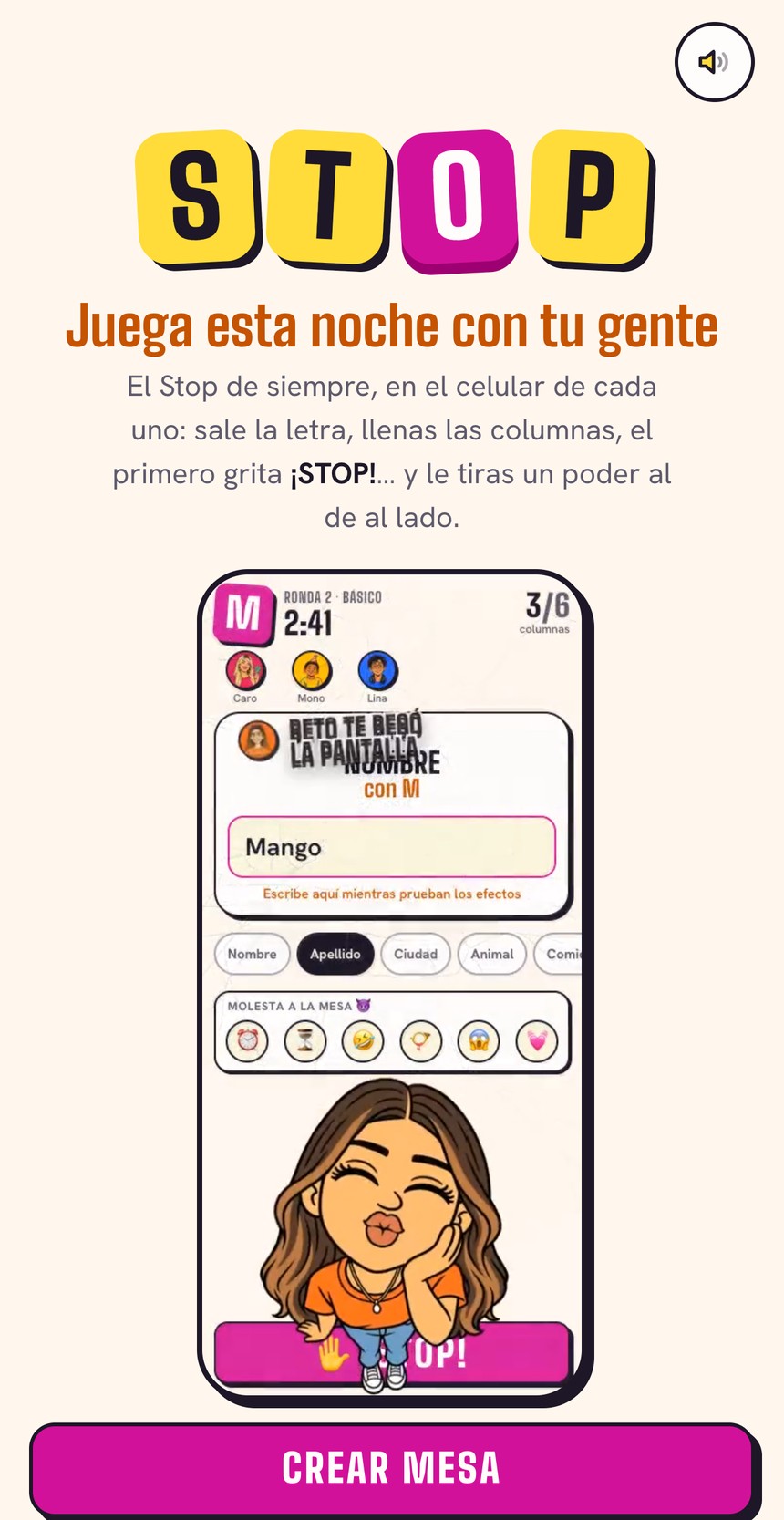
An idea for playing with my family ended up becoming something two businesses could use. What changed was how many ideas I can afford to try.
Something similar happened to me with books. I know how important reading is, but when I want to do it I'm very tired, or I want to "read" in the car or while I walk.
Before building anything I tried it out with an agent: I sent it photos of the pages and it was the voice. Six days later that trial was Aldo, a website that reads to me in Spanish and saves my notes next to the passage that sparked them.

It's a proof of concept. It has just one book, which I plan to remove: I wanted to see how people reacted.
In the first week 45 profiles were created, the reader was opened 63 times and 23 notebooks saved some reading progress. That includes my own tests, so it's not 45 people.
Later I'll use it to study articles and to read the books I have as PDFs. I'm trying to remove friction: lower my resistance to reading and get the same thing another way.
DHH talks about software; I think many other professions are going to face a similar change, at different speeds.
In your profession, what's your equivalent of writing code? The skill that took you years to master and that your living depends on today?
Maybe you can spot a bad proposal before it reaches the client. You know what question is missing, what promise can't be kept or where a process usually breaks. That judgment can help you directthe work and pick a problem worth solving.
Recently I saw a line signed by @anacalinx. I no longer have the original, so this is my paraphrase:
The era of the influencer is over. What is about to begin is the era of the intellectual with more than ten years of experience who shares it on the internet for the first time.
I take it as a provocation.
I think of someone who has spent years solving problems, has never thought of themselves as a creator and can now turn that knowledge into an explanation, a tool or a service. They still need to find who it's useful to.
Third change: from exploring other interests to directing a team
My first system: a content company
I know how to build tech products, but my Achilles' heel is distribution. A video can attract attention; I still need to consistently reach the people I can be useful to.
I have thousands of ideas in Apple Notes.
My first big goal is to build a company around my own content, supported by agents: research, turn those ideas into articles and videos, and distribute them consistently. I call the system I'm using to organize that work LARA OS.
There are already two of us working on this: my cousin, who has worked with me in tech, and me. I decide what I want to share.
Naval wrote it in 2018, in his thread on how to get rich without getting lucky:
"Code and media are permissionless leverage. They're the leverage behind the newly rich. You can create software and media that works for you while you sleep."
That's where my two interests meet.
I want to write on Substack, republish on X and turn those articles into videos for a new YouTube channel. I'll show tools, how I make my videos with AI and what works or fails when you direct agents toward a common goal.
The topics come from my interests: designing my life, building my own business, creating with AI and learning to communicate it.
To figure out how to present them, I study outliers: pieces that did much better than usual for small and mid-size creators, especially in the English-speaking world. If you're interested in doing the same, one of the tools I use is Eden.so.
I study creators like Dan Koe, Dickie Bush and Signull: how they open a topic, sustain an argument or make an experience useful. From there I develop my own position and test it against what I've lived.
LARA OS started as a folder with my vision, stories, references and quality criteria. With agents we turned those decisions into skills: procedures for researching, writing and preparing distribution.
With Codex and Claude Code I direct agents that keep the sources and work on the argument, the titles and the introduction.
While I prepare this article, I walk and talk with the system. I develop my perspective and decdie what stays; the agent applies the changes. I can direct that execution without sitting in front of the screen.
Publishing consistently and adapting to each platform are still under construction. The next test is to take one idea all the way through, end to end, and see where it still depends on me.
The first one is already out: a video, a guide and my website.
Handing off a complete part of the work
I was interested in film. I even considered studying in Canada, but I didn't have the budget to make that jump.
With AI tools I started creating images, voices and characters. The earthquake video showed me I could tell a story that made people feel something without standing in front of a camera. I could explore that interest and learn by producing.
That also opens a door for people who are introverts or simply don't want to become influencers. I like to think of film directors: people who choose what to tell and how to make it felt, even if they never appear on camera.
That's how I'm using it. In November my 2D avatar was born: a drawn version of me, with my cloned voice, that shares my ideas in short videos. It has its own account, @imsebas.io.
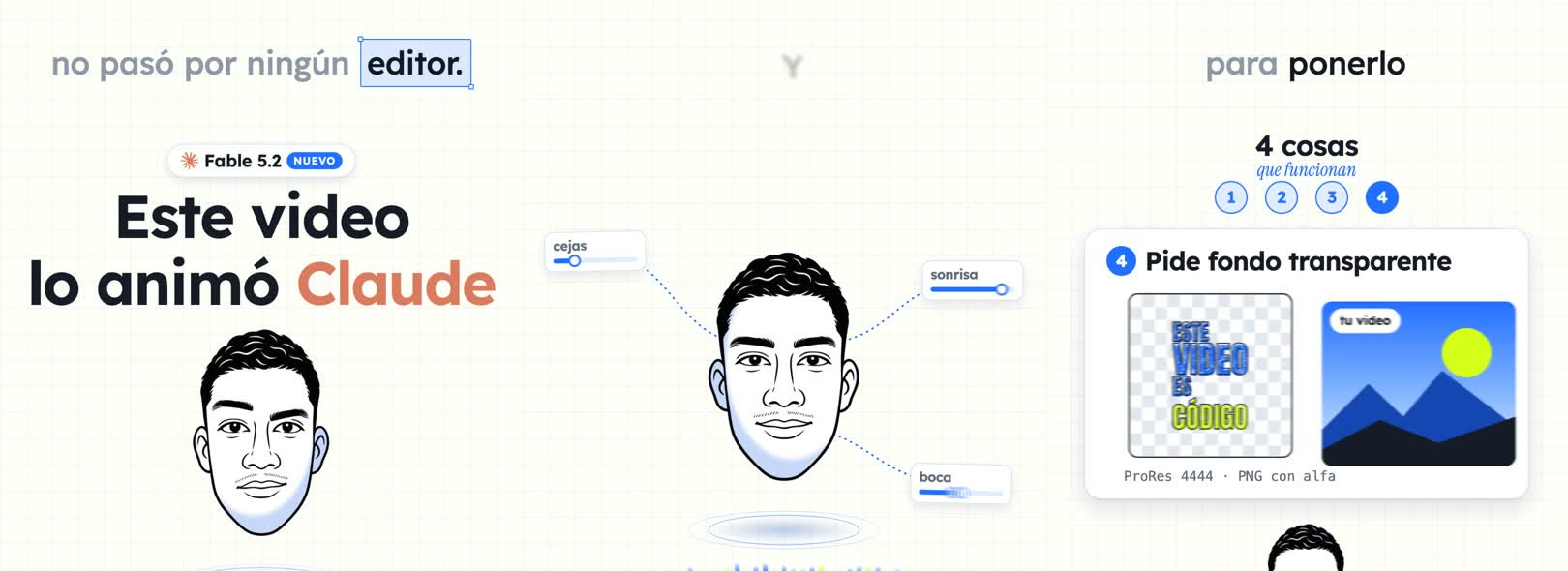
Not all of uswant to stand in front of a camera every day just because we're supposed to. We want to work on our idea, on our business.
For years the formula was to film yourself giving three tips or doing the same get ready with me everyone was doing, and a lot of people feel that if they don't film themselves, they don't eat.
An avatar is another way to share ideas, and little by little it's been getting accepted. For someone who doesn't want to show their face it is, at the very least, a starting point.
It's not just one prompt and you're done: you have to learn to connect things, and to connect them with your creativity and the way you see the world too.
The agents research, animate with code and do the sound; I pick the topic, correct and approve. I'm thinking about building an engine so anyone can create their own very easily.
In the meantime, I teach how I do it in a guide: Claude animated my entire video. Here are the 4 prompts and the route that actually works.
The guide starts from one in English by Roberto Nickson; I documented the route that actually worked for me. If you comment MOTION on this reel, I'll send it to you.
I'm also applying it to selling a house. With Claude I built a website to present it and organized how to get the word out. The agent looks for Facebook groups, writes posts and prepares replies; when I approve them, it publishes them. I keep the sale and negotiation decisions.
The next step: work between conversations
I went from asking in a chat to handing off tasks in the browser and on my computer. Then I could direct them from the gym, the supermarket or the street; now by voice too.
The next step is for the work to move forward without me asking each time. I already have two cases running.
The first is the paperwork. As a contractor, every week I have to report my hours and every month I have to put togteher an invoice. By hand it was horrible: I couldn't remember what I had done and, if I missed it once, the payment got delayed.
Today Godínez does it, a bot I have on Grok Bot. Nobody reminds him: he has his own routines.
What I gained is attention. I no longer carry the question of whether I sent the hours or whether I got paid.
I asked him to describe himself for this article. I'm keeping this line:
"He keeps what he likes, which is building, and I keep the paperwork."
I approve the messages sent in my name. He does the work; the last word is mine.
My second case is called Francesca. She's my dot, the ChatGPT assistant that can keep work going between conversations, even by voice. To me she's like my right hand: an autonomous secretary who has access to my life and helps me with whatever I need.
- Every morning she checks my emails about subscriptions, renewals and charges. She lets me know if something changed and stays quiet if there's nothing new.
- Once she found a failed charge, checked it against the emails that came in afterward and let me know.
- When I have an idea, she researches it and leaves me a plan in phases. Not everything she prepares ends up built.
To send a message, share a piece of my data or pay for something, she asks for my authorization.
I just set up the third one.
Every Friday night, an agent reads what I wrote to my agents during the week and leaves me numbered proposals: a rule I repeated, an idea that could become an article. I answer yes or no. I still need to see how it behaves.
My bet for the rest of 2026 and for 2027 is that agents will carry more and more work like this: moving it forward, proposing next steps and checking with me when my judgment is needed. I want to explore how far it works.
Grok Bot's idea is bots with shared context and a coordinator. With it I also designed the first version of LARA OS and the first sketch of Aldo. I'm going to open my YouTube channel with a video about that: "Use Grok Bot better than 99% of people (full course)."
I want to keep building.
That's where agency comes in: taking the initiative without waiting for someone to give you a title or lay out the path for you. Having access to an agent doesn't make those decisionsfor you.
What part of your work could you hand off completely, and what decision would still be yours?
The 5 things I'd do this week
When someone asks me "how do I start using AI?" I have a hard time answering without knowing what they want to achieve. It's like asking how to get in shape: there are many paths, and the one that works for you depends on where you are and where you want to go.
Dickie Bush describes how he separates decisions from execution: he decides what a project should achieve and hands off tasks he can review. You can start trying that way of working this week.
1. Pick a problem you already understand
If you're a lawyer, designer, video editor or accountant, you probably know problems that other people have a hard time solving. Think of one that people already ask you for help with and write: "I want to help this person get this result."
I'd open ChatGPT Voice and start talking. I like it because I can develop an idea by talking it through. Tell it what you do for a living, how you solve that problem today and where you get stuck:
"I want to solve this problem for this person. Today I do it this way. Ask me questions to understand it and help me find a first test with AI. Explain what I'd have to learn and how to check whether it works."
I pay two hundred dollars a month for ChatGPT Pro and one hundred for Claude Max for the use I give them. Those subscriptions aren't a requirement to get started.
If you know customer service at a business, you could start with the questions that repeat before a purchase. Talk to whoever receives them and find out which ones eat up time or leave customers without an answer. Before thinking about ten agents, find a job worth doing.
It's done when you can write that sentence with a real person and a result that can be checked.
2. Define a small deliverable and how you'll know it works
For that business, it could be an assistant that answers five frequent questions and passes the rest along. For another problem, a page that presents a service or a video that explains something hard.
You don't have to know how to do it tecnhically. You have to know what you want and how you want it, and pass along a reference. AI is really good when you give it your definition of good.
Define what "done" means:
- Correct information.
- Links that work.
- No made-up promises.
- A clear next step.
It still happens to me that an agent tells me it's finished, and it isn't. That's why I leave them in writing.
It's done when you have written down, in four or five lines, what done means.
3. Separate your decisions from the execution you can hand off
In the assistant from the example:
- You decide what information is valid, what it can offer and when it should call a person.
- The agent can help you prepare answers, set up the flow and test it, depending on the tools and access available.
Before it executes, ask it for the plan and approve it. This is how I say it to my agents:
"I don't want to do it all in one go and be left blind to what you did. I want you to analyze everything, yes, and to propose stages to me."
Ask it to point out what it's missing before it assumes important data. Try an ambiguous question, point out the answer that fails and explain what you expected.
It's done when you have two lists: what you decide and what the agent executes.
4. Test the whole thing end to end and show it to someone
Have a person outside the project try to use it:
- Do they understand what they can ask for?
- Do they get correct information?
- Do they reach someone when the assistant can't help?
Then test it with real questions and with whoever handles them today. Does it reduce their work or keep customers from going unanswered? If it answers well but doesn't improve that problem, adjust the test before turning it into a process.
Think about how you'll present the deliverable: who you'll show it to, what problem they'll recognize and why they'd want to try it. If you're looking for a business, you also need to find out whether the result is worth someone payingfor. Test distribution from that first version.
It's done when someone who isn't you used it from start to finish and you know what worked for them and what didn't.
5. Turn what already worked into a process
Keep:
- The instructions.
- The references.
- The errors you found.
- The criteria you used to accept the result.
Define what each role receives, what it has to deliver, who it passes the work to and when it should check with you.
At one point I felt that a single agent was carrying everything. What I want now is agents with specific processes that can work as a team: I talk to one and the rest gets delegated to the specialists.
In the assistant from the example, establish which questions it resolves, what information it needs and which cases it passes to a person. Expand its autonomy once you've checked that path end to end.
Later you can expand the process, connect it to another one or apply what you learned to a different problem. That's how I learn: I test, review and adjust until I find a way of working that works for me.
My principle is: learn to build; then, create a system that helps you build it. In LARA OS, every correction we make to this article should improve the next round. We're still building it.
It's done when you can repeat the work without starting from scratch.
When you finish your first test you'll have a result to show, tasks you know how to hand off and specific questions for whoever might need it. Maybe you'll find an offer; maybe you'll discover you need to change the deliverable.
I want to combine my interests to create something useful, use social media so it reaches other people and build systems with AI that help me sustain it. A company that also leaves me room to live.
For years I prepared so that a company would need what I knew how to do.
Now I also want to use what I know to build my own.
The first deliverable can be small.
The direction has to be yours.